
End-of-Life Care in Tulsa, OK: Complete Guide to Hospice, Palliative & Home Health Services
 Finding Compassionate End-of-Life Care for Your Loved One in Tulsa
When someone you love faces a terminal illness or life-limiting condition, the decisions ahead can feel overwhelming. You want your family member to remain comfortable, maintain dignity, and spend their remaining time surrounded by the people and places they cherish. For many Tulsa families, this means arranging quality end-of-life care that honors both medical needs and personal values.
End-of-life care in Tulsa, OK provides comprehensive support for patients and families navigating this difficult journey. Whether your loved one prefers to remain at home in Midtown Tulsa, resides in an assisted living facility in Broken Arrow, or needs specialized residential care, compassionate services are available throughout the Tulsa metropolitan area.
This guide explains the different types of end-of-life care available in Tulsa, helps you understand what to expect, and provides the information you need to make confident decisions for your family. Suncrest Hospice has served Tulsa families with exceptional care, bringing comfort and support to homes across Green Country.
What is End-of-Life Care?
End-of-life care refers to the comprehensive medical, emotional, and spiritual support provided to individuals with terminal illnesses or advanced chronic conditions. This type of care focuses on comfort, quality of life, and symptom management rather than curing the underlying disease.
The Primary Goals of End-of-Life Care
End-of-life care aims to help patients live their remaining days with as much comfort and dignity as possible. Trained healthcare professionals manage pain and distressing symptoms, address emotional and spiritual needs, and support both patients and their families through the dying process. The care team works to honor each person’s values, preferences, and goals while providing expert medical attention.
Common Misconceptions About End-of-Life Care
Many people believe end-of-life care means giving up or hastening death. This is not true. Quality end-of-life care neither speeds up nor delays the natural dying process. Instead, it ensures patients remain as comfortable as possible while receiving appropriate medical attention. Some patients even experience improved quality of life and, in certain cases, extended survival when distressing symptoms are properly managed.
Another misconception is that end-of-life care only happens in the final days or hours. In reality, hospice care becomes available when a physician determines a patient has a life expectancy of six months or less. Palliative care can begin at any stage of serious illness, even alongside curative treatments. Starting these services earlier often provides better symptom control and family support.
Types of End-of-Life Care Available in Tulsa
 Tulsa families can access several types of end-of-life care services, each designed to meet different needs and situations. Understanding the distinctions helps you choose the right support for your loved one.
Hospice Care in Tulsa
Hospice care provides comprehensive support for individuals with a terminal diagnosis and a life expectancy of six months or less, as certified by a physician. Patients choosing hospice have decided to focus on comfort rather than pursuing curative treatments. Hospice care for aging adults in Tulsa brings together an interdisciplinary team that addresses physical, emotional, and spiritual needs.
The hospice team typically includes registered nurses, certified home health aides, social workers, chaplains, bereavement counselors, and trained volunteers. These professionals work together to manage pain and symptoms, provide personal care assistance, offer emotional support, address spiritual concerns, and guide families through end-of-life decisions. Medicare covers hospice services completely when eligibility requirements are met, eliminating financial barriers for Tulsa families.
Most hospice care in Tulsa happens in the patient’s home, whether that’s a private residence, assisted living facility, or nursing home. Suncrest Hospice serves families throughout the Tulsa area, bringing skilled nursing care and compassionate support directly to wherever patients call home. The team visits regularly—often more frequently than the national average—to ensure optimal comfort and symptom control.
Palliative Care in Tulsa
Palliative care differs from hospice in important ways. Palliative care in Tulsa is available to anyone with a serious illness, regardless of prognosis or whether they’re still pursuing curative treatment. A patient can receive chemotherapy for cancer while simultaneously receiving palliative care to manage pain, nausea, and emotional distress.
The goal of palliative care is improving quality of life by addressing symptoms and supporting patients and families dealing with serious illnesses. This care can begin at diagnosis and continue alongside other medical treatments. Palliative care teams help coordinate care between different providers, facilitate difficult conversations about goals and preferences, and provide an extra layer of support throughout the illness journey.
Many Tulsa residents benefit from palliative care for conditions like heart failure, COPD, kidney disease, dementia, and cancer. The service helps manage complex symptoms, reduces hospital readmissions, and improves overall patient satisfaction with care. When the time comes that curative treatments are no longer beneficial, patients receiving palliative care can transition seamlessly to hospice services.
Home Health Care for End-of-Life Support
While hospice and palliative care focus specifically on serious and terminal illnesses, home health care in Tulsa provides skilled nursing and therapy services for patients recovering from illness, surgery, or hospitalization. Home health becomes relevant to end-of-life care when patients are transitioning between different levels of care or need skilled services before qualifying for hospice.
Home health nurses provide wound care, medication management, patient education, and health monitoring under a physician’s orders. These services help patients avoid rehospitalization and maintain independence at home. For some patients, home health care serves as a bridge—providing support during recovery or chronic disease management until hospice care becomes appropriate.
Medicare covers home health services when patients meet specific criteria: they must be homebound, require intermittent skilled nursing or therapy, and be under a physician’s care. Many Tulsa residents transition from home health to hospice care as their condition progresses, benefiting from continuity when they work with providers who offer both services.
End-of-Life Care at Home in Tulsa
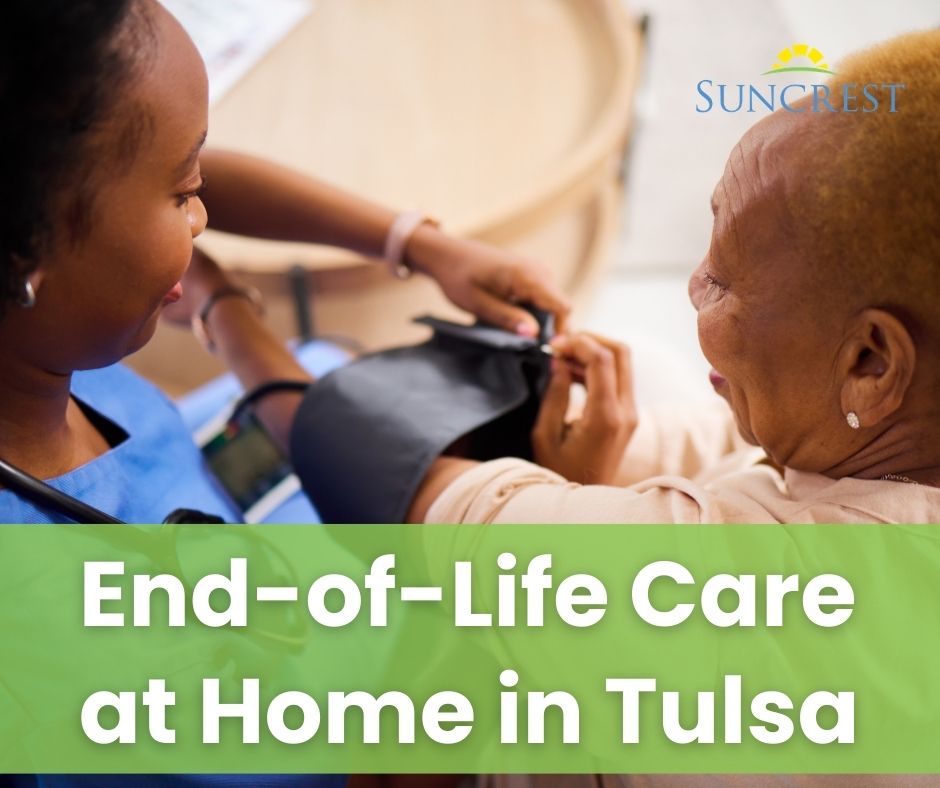 Most people prefer to spend their final days in familiar surroundings, surrounded by family and cherished belongings. Finding comfort through hospice care at home in Tulsa makes this possible for the majority of patients.
Benefits of Receiving End-of-Life Care at Home
Being at home during end-of-life care offers numerous advantages. Patients remain in comfortable, familiar surroundings where they feel most relaxed and secure. Family members can be involved in care according to their comfort level, spending quality time together without the constraints of visiting hours. Many people experience better symptom control and less anxiety when receiving care at home compared to institutional settings.
Home-based end-of-life care also allows patients to maintain their daily routines and preferences as much as possible. They can eat their favorite foods, keep their own schedule, spend time with pets, and have privacy when desired. For many Tulsa families, having loved ones at home makes the dying process feel more natural and peaceful.
What to Expect from In-Home End-of-Life Care
When you arrange end-of-life care at home in Tulsa, the care team comes to you. Registered nurses visit on a regular schedule—typically two to three times per week, though Suncrest provides more frequent visits than the national average when needed. During visits, nurses assess the patient’s condition, manage medications, provide wound care or other treatments, and address any new symptoms or concerns.
Certified home health aides visit multiple times per week to assist with bathing, dressing, grooming, and other personal care needs. This support helps maintain patient comfort and dignity while giving family caregivers much-needed respite. Social workers help families navigate emotional challenges, connect with community resources, and make important decisions. Chaplains provide spiritual support tailored to each family’s faith tradition or personal beliefs.
The hospice team is available 24 hours a day, seven days a week. If symptoms worsen or new problems arise between scheduled visits, families can call the hospice number any time for guidance and support. In urgent situations, a nurse can make an unscheduled visit to address the issue promptly.
Who Qualifies for End-of-Life Care at Home?
To receive hospice care at home, patients must have a terminal illness with a prognosis of six months or less, as certified by a physician. They must also choose to focus on comfort rather than curative treatment. Beyond these basic requirements, there are no restrictions based on age, diagnosis, or specific symptoms.
Patients can receive hospice care at home regardless of whether family members are present 24/7. The hospice team provides as much hands-on care as needed, though family involvement is encouraged when possible. If safety concerns arise or symptoms become too difficult to manage at home, patients can transition to inpatient hospice care temporarily or permanently.
When Home Isn’t an Option: Other Care Settings in Tulsa
While most people prefer end-of-life care at home, this isn’t possible for everyone. Tulsa offers several alternatives for those who need care in other settings.
Residential Hospice Homes
Residential hospice homes provide end-of-life care in a homelike setting for patients who cannot remain in their own homes. Tulsa is home to facilities like Clarehouse and Porta Caeli House, which offer free residential hospice care for people dying in need. These Social Model Hospice Homes create a warm, family-oriented environment with 24-hour care staff, private bedrooms, and spaces for family gatherings.
Residential hospice homes serve patients who lack adequate caregiver support at home, face unsafe home environments, or have complex medical needs requiring continuous monitoring. These facilities fill a critical gap in Tulsa’s continuum of end-of-life care, ensuring no one dies alone or without proper support due to financial or social barriers.
Assisted Living and Nursing Homes
Many Tulsa residents live in assisted living facilities or nursing homes when they enter the final stages of life. Hospice providers like Suncrest bring end-of-life care services to these facilities, working collaboratively with existing staff to ensure comprehensive support. Nurses visit the facility to provide hospice-specific care while the facility staff continues to provide room, board, and routine assistance.
This arrangement allows patients to remain in familiar surroundings with staff they know, while also receiving the specialized symptom management and emotional support that hospice provides. Medicare covers the hospice services completely, and families typically continue paying the facility’s regular fees for room and board.
Hospital-Based Inpatient Hospice Care
Sometimes symptoms become severe enough to require short-term inpatient hospice care. Tulsa-area hospitals provide inpatient hospice units or rooms where patients can receive intensive symptom management. These admissions are typically brief, focused on getting symptoms under control so patients can return home or to their regular care setting.
Inpatient hospice care addresses crisis situations like uncontrolled pain, severe respiratory distress, or rapidly changing symptoms that overwhelm family caregivers. Medicare covers these short-term stays when medically necessary. Once symptoms stabilize, patients usually return to receiving hospice care in their home or facility.
Choosing the Right End-of-Life Care Provider in Tulsa
 Selecting an end-of-life care provider is one of the most important decisions you’ll make for your loved one. Several factors should guide your choice.
What to Look for in a Provider
Quality end-of-life care providers demonstrate several key characteristics. Look for agencies with experienced, well-trained staff who have specialized expertise in hospice and palliative care. The best providers offer comprehensive interdisciplinary teams that include not just nurses and aides, but also social workers, chaplains, and bereavement counselors.
Visit frequency matters significantly. Providers who visit more often than average can catch and address problems before they become crises. Suncrest Hospice visits more times per week compared to the national average, ensuring patients receive attentive, proactive care. Ask about response times for urgent situations and after-hours support availability.
Strong providers also offer additional services that enhance comfort and quality of life. Emotional support services like massage therapy, music therapy, and pet therapy can make a tremendous difference in patient wellbeing. Bucket list assistance helps patients experience meaningful moments during their remaining time. Bereavement support that continues after a loved one’s death helps families navigate grief.
Questions to Ask Potential Providers
When evaluating end-of-life care providers in Tulsa, ask about their experience serving patients with your loved one’s specific diagnosis. Inquire about visit frequency and staffing ratios. Ask what happens during nights and weekends, and how quickly nurses can respond to urgent calls.
Find out what services are included beyond basic medical care. Does the provider offer emotional support therapies? Is spiritual care available regardless of religious background? What bereavement services are provided to families? How does the agency support cultural and personal preferences?
Request information about the agency’s quality metrics, patient satisfaction scores, and whether they’ve received any special certifications or awards. Check online reviews and ask for references from families who have used their services. A provider’s reputation in the Tulsa community speaks volumes about the care they deliver.
The Suncrest Difference in Tulsa
Suncrest Hospice has built a reputation for exceptional end-of-life care throughout Tulsa and Green Country. The team understands that each patient and family is unique, designing personalized care plans that honor individual goals and preferences. Suncrest’s highly qualified care team includes experienced professionals across all disciplines, working together to provide seamless support.
What sets Suncrest apart is the commitment to going above and beyond. The team helps patients check items off their bucket lists, creating meaningful experiences during remaining time. Annual memorials honor patients who have passed, giving families a space to remember and celebrate their loved ones. Bereavement support continues long after death, helping families process grief and adjust to loss.
Suncrest serves all of Tulsa’s diverse neighborhoods and housing types, from downtown high-rises to rural properties in Green Country. The team brings cultural competence and sensitivity, respecting Tulsa’s strong faith community while welcoming families of all backgrounds and beliefs. Learn more about Suncrest’s hospice care services in Tulsa and the communities we proudly serve.
Medicare Coverage for End-of-Life Care in Oklahoma
One of the most common concerns families have about end-of-life care is cost. Fortunately, Medicare provides comprehensive coverage for hospice services, and many people are surprised to learn there are typically no out-of-pocket expenses.
What Medicare Covers
Medicare Part A covers hospice care completely when patients meet eligibility requirements. This includes all nursing services, home health aide visits, medical equipment and supplies, medications related to the terminal diagnosis, counseling services for patients and families, respite care to give family caregivers a break, and grief support after death.
There are no deductibles or copayments for most hospice services. Families may pay small copayments for medications and respite care—typically $5 or less per prescription and about 5% of the Medicare payment for respite care—but these costs are minimal. The vast majority of hospice services are provided at no cost to families.
Eligibility Requirements for Oklahoma Residents
To qualify for Medicare-covered hospice care in Oklahoma, patients must be enrolled in Medicare Part A, have a terminal illness with a life expectancy of six months or less as certified by a physician, sign a statement choosing hospice care instead of curative treatment, and receive care from a Medicare-approved hospice agency like Suncrest.
The hospice benefit includes two 90-day benefit periods followed by an unlimited number of 60-day periods. At the end of each period, the physician recertifies that the patient remains terminally ill, allowing hospice care to continue as long as needed. There is no limit to how long someone can receive hospice care if they continue to meet eligibility criteria.
Private Insurance and Medicaid
Most private insurance plans cover hospice care with benefits similar to Medicare. Medicaid also covers hospice services in Oklahoma for those who qualify. Hospice agencies work directly with insurance companies to handle billing, so families typically don’t need to worry about paperwork or claims.
Financial concerns should never prevent anyone from accessing quality end-of-life care. Suncrest works with various insurance providers and can explain coverage details specific to your situation. The focus remains on providing exceptional care regardless of payment source.
Understanding Tulsa’s Cultural and Community Context
Providing quality end-of-life care in Tulsa requires understanding the community’s unique cultural characteristics and values. Suncrest’s team recognizes what makes Tulsa special and tailors care to honor these local traditions.
Faith and Spiritual Care in Tulsa
Tulsa is known for its strong Christian community and deep faith traditions. Many families want spiritual care integrated into end-of-life services, and Suncrest’s chaplains work alongside local churches and faith communities to provide this support. The spiritual care team respects all faith traditions—from Baptist and Methodist to Catholic, Pentecostal, and beyond—while also supporting families who prefer secular approaches.
Spiritual care at end of life addresses questions of meaning, purpose, and what happens after death. Chaplains provide prayer, scripture reading, religious rituals, or simply a listening presence, depending on each family’s preferences. This spiritual dimension of care brings comfort to many Tulsa families navigating the dying process.
Family Values and Southern Hospitality
Tulsa culture reflects both Southern hospitality and Western independence. Families value self-reliance but also deeply appreciate community support during difficult times. Suncrest’s approach balances respect for family autonomy with proactive offers of help and guidance. The team asks what families need rather than assuming, honoring the desire for independence while ensuring no one struggles alone.
Many Tulsa families maintain strong extended family networks, and end-of-life care often involves multiple generations and relatives. Suncrest accommodates large family gatherings, helps coordinate communication among numerous family members, and provides support for all involved in the patient’s care.
Working-Class Heritage and Practical Needs
Once known as the “Oil Capital of the World,” Tulsa has strong ties to the energy industry and blue-collar work. Many seniors worked in physically demanding careers and face unique health challenges. Suncrest’s team understands the pride and resilience of Tulsa’s working-class families and provides care that respects this heritage.
Practical support matters greatly. Families appreciate straightforward communication, efficient service, and help with logistics. Suncrest provides clear explanations of what to expect, handles paperwork and insurance billing, and coordinates equipment delivery and setup. This practical assistance allows families to focus on what matters most: spending time with their loved one.
Tulsa Neighborhoods and Communities We Serve
Suncrest Hospice provides end-of-life care throughout the Tulsa metropolitan area and surrounding communities. The team serves families across Green Country’s varied terrain, from urban neighborhoods to rural properties.
Tulsa City Neighborhoods
Suncrest brings hospice care to all Tulsa neighborhoods, including:
- Midtown Tulsa: Historic homes and walkable streets where many residents prefer to age in place
- Downtown and Brady Arts District: High-rise apartments and loft condos with urban amenities
- South Tulsa: Suburban neighborhoods and newer developments
- Brookside and Cherry Street: Established areas with strong community connections
- Greenwood District: Historic area rebuilding after historic challenges
- North Tulsa and Turley: Diverse communities with varied housing types
- West Tulsa and Red Fork: Working-class neighborhoods with long-time residents
Surrounding Communities
Beyond Tulsa proper, Suncrest serves families in Broken Arrow, Jenks, Bixby, Owasso, Sand Springs, Sapulpa, and other Green Country communities. Whether your loved one lives in a ranch home in Broken Arrow, a lakeside property near Keystone Lake, or an apartment in Jenks, Suncrest brings compassionate end-of-life care directly to them.
The team navigates Tulsa’s varied terrain—from forested hills to flat plains—ensuring geographic barriers never prevent access to quality care. Families across the region can trust Suncrest to provide consistent, reliable service no matter where they live.
Frequently Asked Questions About End-of-Life Care in Tulsa
What is end-of-life care in Tulsa, OK?
End-of-life care in Tulsa, OK encompasses hospice care, palliative care, and supportive services for individuals with terminal illnesses or advanced chronic conditions. These services focus on comfort, quality of life, and symptom management rather than curing disease. Care is provided in homes, assisted living facilities, nursing homes, or residential hospice settings throughout the Tulsa area.
What’s the difference between hospice and palliative care in Tulsa?
Hospice care is for patients with a terminal diagnosis and life expectancy of six months or less who choose to focus on comfort rather than curative treatment. Palliative care is available at any stage of serious illness, even alongside curative treatments, and focuses on symptom management and quality of life without requiring a terminal prognosis. Both are available throughout Tulsa.
How do I know if my loved one needs end-of-life care?
Signs that end-of-life care may be appropriate include a terminal diagnosis with limited prognosis, declining health despite aggressive treatment, frequent hospitalizations, difficulty managing symptoms at home, or the patient expressing a desire to focus on comfort rather than cure. Your loved one’s physician can help determine whether hospice or palliative care is suitable.
Is end-of-life care covered by Medicare in Oklahoma?
Yes, Medicare Part A covers hospice care completely for Oklahoma residents who meet eligibility requirements. This includes nursing services, medications related to the terminal diagnosis, medical equipment, counseling, and bereavement support. There are typically no copayments or deductibles for most hospice services.
Can my loved one receive end-of-life care at home in Tulsa?
Yes, most end-of-life care in Tulsa happens in patients’ homes. Hospice providers like Suncrest bring nurses, aides, social workers, and chaplains directly to your home, whether that’s a private residence, assisted living facility, or nursing home. The care team visits regularly and is available 24/7 for urgent concerns.
What services are included in end-of-life care?
End-of-life care typically includes skilled nursing visits, personal care from certified aides, pain and symptom management, medications and medical equipment, social work support, spiritual care, bereavement counseling, and 24/7 phone access to nurses. Some providers also offer massage therapy, music therapy, and other comfort-enhancing services.
How much does end-of-life care cost in Tulsa?
For patients with Medicare, hospice care is covered at 100% with no out-of-pocket costs for most services. Medicaid and private insurance also typically cover hospice care. Suncrest works with various insurance providers and can explain coverage specific to your situation. Cost should never be a barrier to quality end-of-life care.
When should I contact an end-of-life care provider?
Contact an end-of-life care provider when your loved one receives a terminal diagnosis, experiences declining health despite treatment, struggles with symptom management, or expresses a desire to focus on comfort. Earlier enrollment in hospice or palliative care often leads to better symptom control and family support. You can request a consultation at any time to explore options.
What if my loved one can’t stay at home during end-of-life care?
Tulsa offers several alternatives for patients who cannot remain at home. Residential hospice homes like Clarehouse and Porta Caeli House provide free end-of-life care in homelike settings. Hospice care is also available in assisted living facilities, nursing homes, and hospital inpatient units. The hospice team works to find the most appropriate setting for each patient’s needs.
Do end-of-life care providers serve all Tulsa neighborhoods?
Yes, Suncrest Hospice serves all Tulsa neighborhoods including Midtown, Downtown, South Tulsa, Brookside, Cherry Street, Greenwood District, North Tulsa, Turley, West Tulsa, and Red Fork. The team also serves surrounding communities like Broken Arrow, Jenks, Bixby, Owasso, and Sand Springs. Geographic location never prevents access to care.
How often will nurses visit for end-of-life care at home?
Visit frequency depends on patient needs but typically includes nurse visits two to three times per week and aide visits three to five times per week. Suncrest visits more frequently than the national average to ensure optimal comfort and symptom control. The team is available 24/7 by phone and can make unscheduled visits when urgent situations arise.
Can family members provide end-of-life care themselves?
Family members can be involved in end-of-life care as much or as little as they prefer, but professional hospice support is strongly recommended. The hospice team provides medical expertise for symptom management, equipment and supplies, respite care to give family caregivers breaks, and 24/7 support. Family involvement is encouraged but should not replace professional care.
What is a Social Model Hospice Home?
A Social Model Hospice Home is a residential facility that provides end-of-life care in a homelike environment rather than a medical setting. Tulsa has facilities like Clarehouse and Porta Caeli House that offer this care free of charge to people who cannot die at home. These homes provide 24-hour staffing, private rooms, and a warm, family-oriented atmosphere.
Does end-of-life care include spiritual support in Tulsa?
Yes, hospice care in Tulsa includes spiritual support from chaplains who respect all faith traditions. Chaplains work with local churches and faith communities, provide prayer and religious rituals when desired, and offer compassionate presence regardless of religious background. Spiritual care is available but never required or forced upon families.
How do I choose an end-of-life care provider in Tulsa?
Choose a provider with experienced staff, comprehensive interdisciplinary teams, frequent visit schedules, 24/7 availability, additional comfort services like massage or music therapy, strong community reputation, and cultural sensitivity. Ask about quality metrics, patient satisfaction scores, and coverage of your loved one’s specific diagnosis. Suncrest Hospice serves Tulsa families with exceptional, personalized care.
Contact Suncrest Hospice for End-of-Life Care in Tulsa
When your family needs compassionate, expert end-of-life care in Tulsa, Suncrest is here to help. Our team serves families throughout the Tulsa metropolitan area with exceptional hospice, palliative, and home health services.
Call us today at 918-221-6366 to speak with a member of our Tulsa team. We’re available to answer questions, provide information about our services, and arrange a consultation at a time convenient for your family.
Visit Our Tulsa Office
Suncrest Hospice – Tulsa
4555 S Harvard Ave, Suite C
Tulsa, OK 74135
Phone: 918-221-6366
What Our Tulsa Families Say
-
Suncrest took wonderful care of my Aunt’s mom. They were a comfort during a time of grief. Thank you.

 ANGELA
My Family had the pleasure of using Suncrest for my Mother's final days on Earth. Meagan was our nurse and she was absolutely amazing! She felt like family too in... read more
Brittny
Great customer service. Very caring, responsive, and friendly.
Kim
-
I'm a social services director at a LTC facility. SunCrest Hospice has been amazing for our residents, the CNA come out 5 days a week and nurses 2-3 days.per week.... read more
Kerri
I'm a social services director at a LTC facility. SunCrest Hospice has been amazing for our residents, the CNA come out 5 days a week and nurses 2-3 days.per week.... read more
Kerri
Wonderful staff! Would recommend to anyone needing hospice care. They go above and beyond & employee some amazing staff!
Colin
-
This entire group was such a blessing to our family during our difficult process of losing a loved one. They each listened to our concerns and did absolutely everything possible... read more
Beth
The staff and support team at Suncrest are top notch. Very kind, and make you feel like all your needs will be taken care of with a professionalism that is... read more
Charlie
Suncrest took care of my mother in her last days when she was dying of dementia and multiple strokes. There was a great kindness with each person who came:... read more
Dale


Families throughout Tulsa, Broken Arrow, Jenks, Bixby, and all of Green Country trust Suncrest for end-of-life care that honors their loved ones’ dignity, comfort, and personal values. Let us support your family with the same exceptional care we’ve provided to hundreds of Tulsa families.
Learn more about our Tulsa hospice services or call 918-221-6366 to speak with our team today.