
In This Article
- What Is a Home Health Aide?
- What Does a Home Health Aide Do Day to Day?
- What a Home Health Aide Cannot Do
- HHA vs. CNA vs. RN: What Is the Difference?
- When Do You Need a Home Health Aide?
- Home Health Aides in Hospice Care
- Does Medicare Cover Home Health Aide Services?
- Is a Career as a Home Health Aide Right for You?
- Frequently Asked Questions
If someone in your family is recovering from a surgery, managing a chronic illness, or getting closer to the end of life, you have probably heard the term "home health aide" come up. But what does a home health aide actually do when they show up at the door?
And more importantly: is it enough help for what your family is dealing with right now?
This guide answers both of those questions plainly. No jargon, no vague reassurances. Just a clear picture of what home health aides do, what they are not allowed to do, and how to figure out whether you need one.
What Is a Home Health Aide?
A home health aide (HHA) is a trained and certified caregiver who helps people with daily tasks at home. They are not nurses. They do not diagnose conditions or manage medical treatment. What they do is help people who can no longer fully care for themselves get through the day safely and with dignity.
Home health aides typically work under the supervision of a registered nurse or therapist who is part of the broader care team. In a hospice setting, they are one piece of a larger team that also includes nurses, social workers, and chaplains. In a home health setting, they work alongside skilled nursing or therapy visits.
Most states require HHAs to complete a training program and pass a competency evaluation before they can work. In states that follow federal Medicare guidelines, the minimum is 75 hours of training, including at least 16 hours of supervised practical skills training. Many aides go beyond the minimum.
What Does a Home Health Aide Do Day to Day?
The short answer: they handle everything that helps a person stay clean, fed, comfortable, and safe at home. The specifics depend on what the patient needs, but here is what a typical visit looks like.
Personal Care
This is the core of the job. An HHA helps with bathing, showering, or sponge baths. They assist with getting dressed and undressed, oral hygiene, hair care, shaving, and nail care. For patients who are bedridden or have limited mobility, this can be the difference between comfort and serious skin problems.
Many families try to handle personal care on their own before calling for help. It is harder than it looks, especially with a loved one who is weak, in pain, or resistant to accepting help. A trained aide knows how to do it safely and in a way that preserves the patient's dignity.
Mobility and Transfers
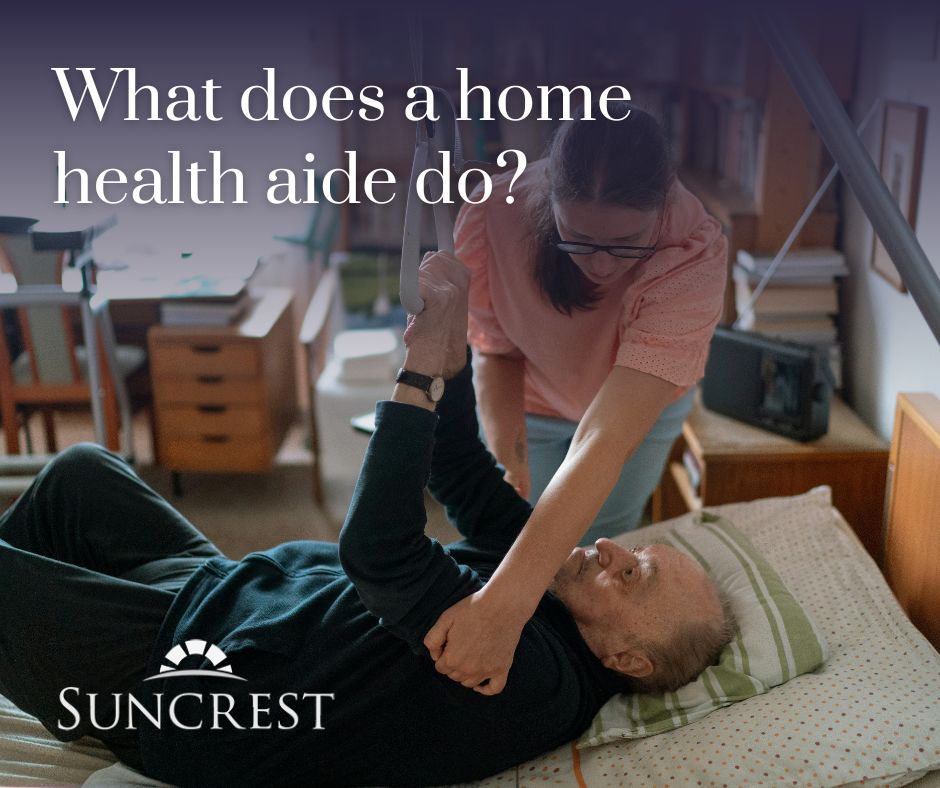
Getting from the bed to the bathroom. Standing up from a chair. Moving from a wheelchair to a car seat. These transitions are high-risk moments for falls, and they require technique. Home health aides are trained in proper body mechanics and safe transfer methods, both to protect the patient and to protect themselves from injury.
For patients who need a Hoyer lift or other equipment, aides are trained on how to use it correctly.
Meal Preparation
HHAs prepare meals according to the patient's dietary needs and preferences. If a patient is on a soft or pureed diet because of swallowing difficulties, the aide knows how to prepare food accordingly. They also help with feeding when the patient cannot manage utensils independently.
Light Housekeeping
Keeping the home clean is part of keeping the patient safe. HHAs do light cleaning: vacuuming, laundry, dishes, changing bed linens, focused on the spaces the patient uses. This is not a full cleaning service, but it is enough to keep the environment sanitary and organized.
Medication Reminders
HHAs can remind a patient to take their medications. What they generally cannot do is administer medications or make decisions about dosing. That falls to the nurse. But a reminder at the right time can make a real difference in medication compliance, especially for patients with memory issues.
Companionship and Observation
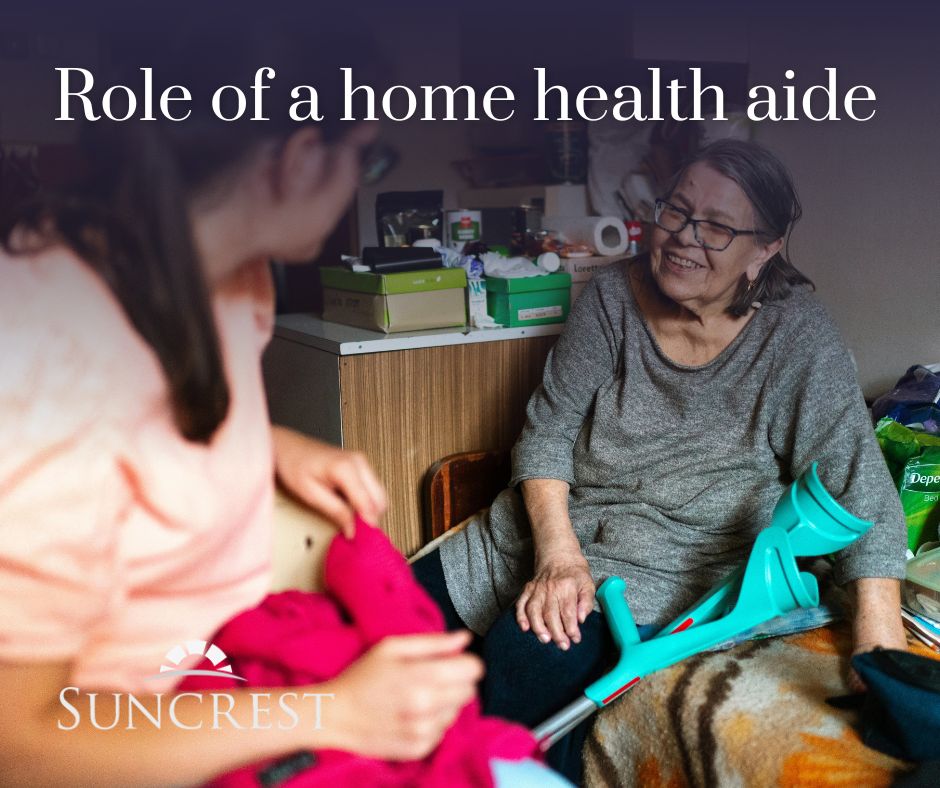
The aide who comes to the house three times a week often sees the patient more consistently than anyone else on the care team. That means they are in a position to notice changes: a new bruise, a shift in mood, a change in appetite, signs that something is off. They report those observations to the supervising nurse, who can then adjust the care plan.
Beyond the clinical observation, the companionship itself matters. Many patients, especially those who live alone or whose families are stretched thin, look forward to aide visits. It breaks up isolation in a way that nothing else on the care team does quite the same way.
What a Home Health Aide Cannot Do
This part matters just as much as knowing what they can do. Families sometimes expect more from an HHA than the role allows, and that creates problems.
A home health aide generally cannot:
- Administer medications: They can remind. They cannot inject, measure dosages, or make clinical decisions about what a patient needs.
- Perform skilled nursing tasks: Wound care, catheter care, IV management, and assessments are the nurse's job.
- Diagnose or treat conditions: Any change they observe goes to the supervising nurse. They do not interpret what it means or decide what to do about it.
- Provide transportation as a medical service: Depending on the agency and state, some aides may assist with errands or rides, but this is separate from their clinical role and not always included.
- Provide 24-hour care independently: HHA visits are scheduled and time-limited. They are not a substitute for round-the-clock supervision when that level of care is needed.
If a family member needs skilled nursing care at home, things like wound management, IV therapy, or complex medication management, that requires a registered nurse or therapist. The HHA works alongside that skilled care, not instead of it.
HHA vs. CNA vs. RN: What Is the Difference?
People use these terms interchangeably and they are not the same thing. Here is a plain breakdown.
| Role | Training Required | What They Do |
|---|---|---|
| Home Health Aide (HHA) | 75+ hours training, competency test | Personal care, ADLs, light housekeeping, observation |
| Certified Nursing Assistant (CNA) | 75–150 hours training, state certification exam | All HHA tasks plus some basic clinical tasks; works in facilities and homes |
| Registered Nurse (RN) | 2–4 years of nursing education, state licensure exam | Skilled nursing care, clinical assessments, medications, wound care, care plan management |
In a hospice setting, the HHA and the RN work as a team. The nurse visits on a clinical schedule: assessing symptoms, managing medications, communicating with the physician. The aide fills in the daily care that makes it possible for the patient to stay comfortable at home between those visits. Neither one replaces the other.
When Do You Need a Home Health Aide?
Here is a practical way to think about it. If the person you are caring for can no longer safely or comfortably do any of the following on their own, a home health aide is probably worth looking into:
- Bathe or shower without risk of falling
- Dress and undress independently
- Prepare their own meals
- Transfer from bed to chair or toilet without help
- Manage basic hygiene
A lot of families wait longer than they should. The family caregiver picks up the slack, getting up earlier, staying later, skipping their own needs. That works for a while. But caregiver burnout is real, and it catches up with people. If you are already stretched thin, an HHA visit several times a week gives you back some of that time and mental space.
It is also worth knowing that you do not have to be at end of life to qualify. HHAs work with people recovering from surgery, managing chronic illness, or living with a disability that affects daily function. The situation does not have to be terminal for the help to be appropriate.
That said, if your loved one is in hospice or approaching the end of life, you can read more about what that transition actually looks like in What Hospice Does Not Tell You. It covers the things most families wish they had known earlier.
Home Health Aides in Hospice Care
In a hospice context, the home health aide's role shifts slightly. The patient is not recovering. They are being kept comfortable. So the focus is less on rehabilitation and more on comfort, dignity, and quality of life in the time remaining.
Hospice HHAs typically visit two to five times per week, depending on the patient's needs and how far along the illness has progressed. As the patient gets closer to death, visits often increase. The aide becomes one of the most consistent presences in the patient's daily life.
They are also one of the first people who might notice that something is changing. If you are watching a parent or partner in hospice care and wondering what the signs of decline look like, these two articles may help: 10 Signs Death Is Near in Dementia and Signs Death Is Near in Hospice: Altered Breathing Patterns. The aide on your care team will recognize these signs and communicate them to the nurse, so the family is not left trying to interpret things alone.
Hospice aide services are covered in full under the Medicare Hospice Benefit, with no copay. If your loved one is receiving hospice care at home, HHA services are already part of the care package. You do not need to arrange them separately.
Does Medicare Cover Home Health Aide Services?
Yes, but with conditions. Medicare covers home health aide services when they are part of a skilled home health plan of care. That means a doctor has ordered the services, and the patient also qualifies for skilled nursing or therapy visits. Aide services alone do not qualify; they have to accompany skilled care.
The patient also needs to be considered homebound, meaning that leaving home requires a considerable effort, like a wheelchair, walker, or help from another person.
When those conditions are met, Medicare covers aide visits at 100%. No copay, no deductible. The aide visits are billed as part of the home health benefit, not separately.
In a hospice setting, the rules are simpler. Under the Medicare Hospice Benefit, aide services are a standard covered service. No additional qualification required beyond hospice eligibility itself.
If the person you are caring for needs a break from providing care, even for a few days, it is worth knowing that Medicare also covers up to five consecutive days of respite care for hospice patients. You can read the full breakdown of how that works at Does Medicare Cover Respite Care?
And if you are a family caregiver wondering whether you can be compensated for the care you are already providing, this guide on how much family members get paid for caregiving breaks down the programs that make that possible, state by state.

Is a Career as a Home Health Aide Right for You?
If you are reading this from the caregiver side of things, as someone who has been taking care of a family member and wondering if this is something you could do professionally, it is a fair question.
Home health aide is one of the fastest-growing job categories in the country, driven by an aging population and a strong preference for aging at home rather than in facilities. The Bureau of Labor Statistics projects significant growth in the field through the 2030s.
The work is physically and emotionally demanding. You are managing someone else's most intimate daily needs, often at difficult moments in their life. But for people who are drawn to caregiving, it can also be genuinely meaningful in a way that not many jobs are.
What you need to get started:
- High school diploma or GED (required by most employers)
- Completion of a state-approved HHA training program
- Passing a competency evaluation
- A background check
- CPR certification (required by many employers)
Training programs are available through community colleges, vocational schools, and some hospice and home health agencies. Many agencies will hire and train at the same time, meaning you do not have to pay out of pocket before getting a job.
Pay varies by state and employer. Medicare-certified agencies are required to pay at least minimum wage, but many pay above that, especially as demand increases and experienced aides become harder to find.
Frequently Asked Questions
How many hours a day does a home health aide work with a patient?
Most HHA visits range from two to four hours, and they typically happen a few times per week rather than every day. The frequency and duration depend on the patient's needs, what is covered by insurance, and the care plan ordered by the physician. In hospice care, visit frequency often increases as the patient gets closer to the end of life.
Can a home health aide live with the patient?
Some families do hire live-in aides, but this is typically through a private arrangement rather than through a Medicare-certified agency. Medicare does not cover 24-hour or live-in aide services. Live-in arrangements are usually paid out of pocket or through Medicaid waiver programs, which vary by state.
Is there a difference between a home health aide and a personal care aide?
Yes. A home health aide works in a medically supervised context, as part of a care plan overseen by a nurse or therapist, usually under a Medicare-certified agency. A personal care aide (also called a home care aide or companion) provides similar support but without the medical supervision or certification requirements. Medicare does not cover personal care aide services.
How do I find a home health aide covered by Medicare?
Start with your physician. Medicare-covered home health services require a physician's order and a plan of care signed by a doctor. Once that is in place, your doctor or discharge planner can refer you to a Medicare-certified home health agency in your area. You can also search Medicare's Home Health Compare tool at medicare.gov.
Can a family member be hired as a home health aide?
This depends on the state and the program. Some Medicaid waiver programs allow family members to be paid as caregivers, but Medicare-certified home health does not. If you are a family member providing care and wondering about compensation options, the specifics vary by state. This breakdown of caregiver pay programs covers the options that currently exist.
What should I look for when choosing a home health aide?
Beyond certification, look for an aide who communicates well, shows up consistently, and treats the patient with genuine respect. Ask the agency how they handle coverage when an aide is sick or unavailable. You do not want to find out the hard way that there is no backup plan. References from other families and tenure with the agency are good signs.
Does a home health aide help at night?
Standard HHA visits are daytime, scheduled appointments. Overnight aide coverage is possible but typically requires a separate arrangement and is not covered by Medicare as part of standard home health. If nighttime supervision is needed, discuss this with the care team. There may be options through Medicaid, the VA, or private pay.
Can a home health aide provide care in an assisted living facility?
Yes, in most cases. If a patient lives in an assisted living community, a home health aide or hospice aide from an outside agency can come to the facility to provide care. The facility is the patient's home for purposes of the care visit. Coordinate with the facility's care team to make sure the two providers are aligned.
Have Questions About Home Health Aide Services?
If you are trying to figure out what level of help your loved one needs, whether that is a home health aide, a hospice care team, or something in between, we can help you sort through the options.
Suncrest Hospice provides home health aide services as part of our hospice care program throughout our service areas. Find your nearest Suncrest location and give us a call. The conversation is free and there is no pressure.