
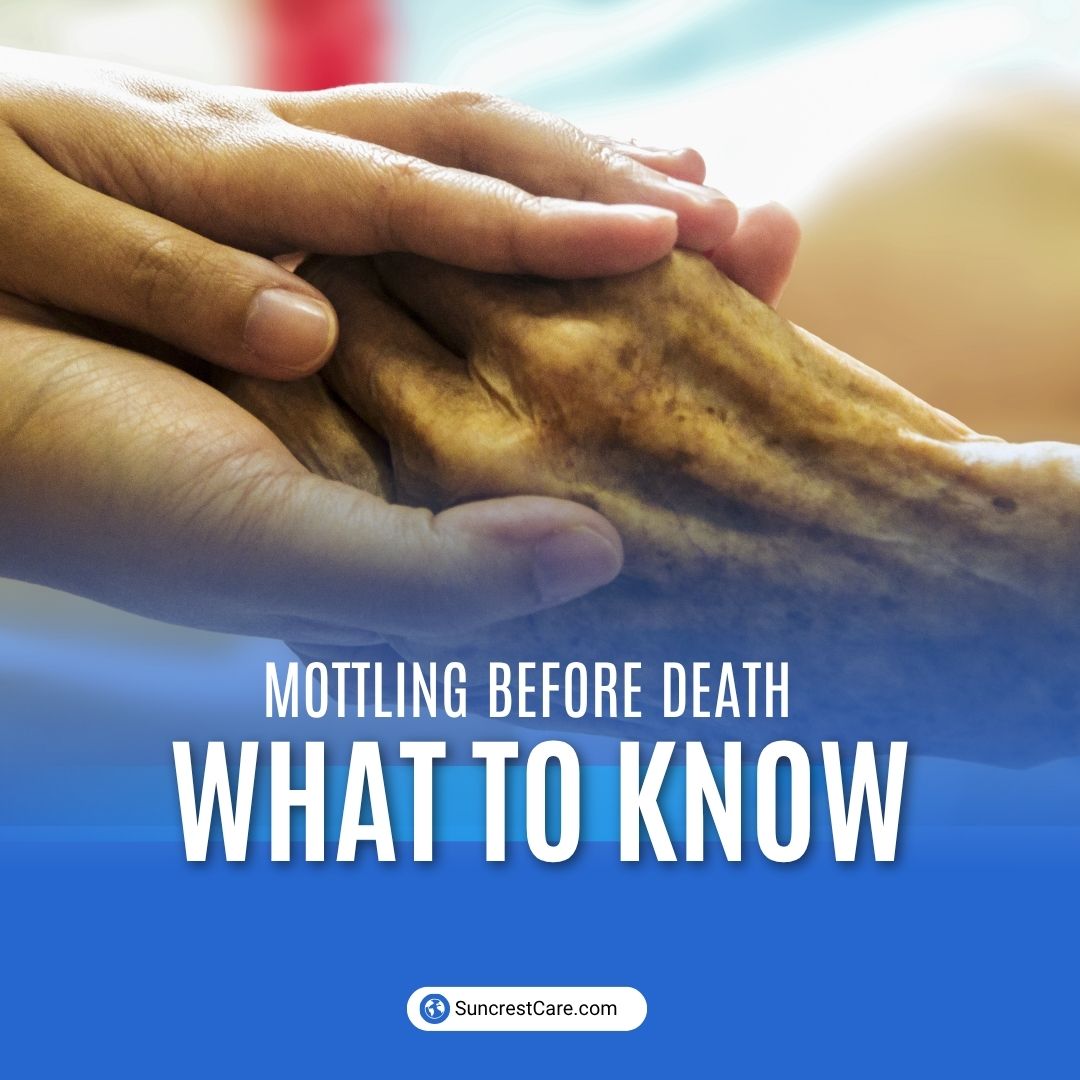
Short answer: Mottling is a patchy, blotchy change in skin color that can happen as circulation slows near the end of life. It often appears on the hands, feet, knees, or lower legs. When a person is already approaching the end of life, mottling can be one of several changes seen in the final days or hours, but it cannot tell a family exactly when death will happen. Let the hospice team know what you notice so they can help with comfort and answer questions.
- Mottling may look blue, purple, red, brown, gray, or darker than the person’s usual skin tone.
- It can be easier or harder to see depending on a person’s skin tone and lighting.
- It is usually not painful or distressing on its own.
- It does not happen to everyone and should never be used as a clock for predicting death.
- Call the hospice team if the change is new, concerning, or you are unsure what to do.
What Is Mottling Before Death?
Mottling is a term for irregular patches or blotches of color on the skin. Near the end of life, it can happen when the body sends less blood to the hands, feet, and other areas farther from the heart as circulation slows.
Families may first notice it on the toes, feet, fingers, hands, knees, or lower legs. The skin may also feel cool. Mottling is one possible change in the dying process, alongside changes in breathing, sleep, alertness, eating, drinking, and urine output. No one sign gives a complete picture on its own.
What Does Mottling Look Like?
Mottling can look different from person to person. On lighter skin tones, it may appear as a blotchy blue, red, purple, or marbled pattern. On darker skin tones, the pattern may look darker than the surrounding skin, purple, brownish, gray, or uneven in color. It may be more noticeable on the hands, feet, legs, or around the knees.
The color can change or spread as the person’s circulation changes. It can be unsettling to see, especially when it appears quickly. Tell the hospice nurse what you are noticing rather than trying to decide from appearance alone what it means.

Watch: A Hospice Nurse Explains Mottling
Why Does Mottling Happen?
As the body becomes weaker, circulation may slow and blood flow may be directed toward vital organs. The smaller blood vessels in the hands, feet, and legs can receive less blood flow, which can lead to cooler skin and patchy changes in color.
In a person who is known to be near the end of life, this can be a normal change. Other conditions can also affect skin color or circulation, so a hospice clinician should assess changes in the context of the person’s illness, symptoms, and goals of care.
Does Mottling Mean Death Is Near?
Mottling can occur in the final days or hours of life, but it does not provide an exact timeline. Some people develop mottling and live longer than expected; others never develop it. The hospice team considers it alongside the person’s breathing, level of consciousness, comfort, and other changes before discussing what may be happening.
It is natural to want a clear answer about timing. Your nurse can explain the broader pattern they are seeing, while being honest that even experienced clinicians cannot predict an exact time of death from mottling or any single symptom.
Is Mottling Painful?
Mottling itself is not usually painful or distressing. A loved one’s hands or feet may feel cool, which can be uncomfortable for family to see even when it is not bothering the person. If your loved one seems uncomfortable, is grimacing, calling out, restless, or has a new symptom, contact the hospice team so they can assess and treat the cause.
How Can Families Help Someone With Mottled Skin?
The most helpful thing is to focus on comfort and connection. You do not need to treat the mottling itself unless the hospice team recommends something specific.
- Use a light blanket, socks, or gloves if they seem comforting and the hospice team agrees.
- Keep the room calm and use a quiet, reassuring voice.
- Hold their hand or offer gentle touch if that feels welcome.
- Follow the care plan for repositioning, skin care, and medicines.
- Tell the hospice nurse about new changes, questions, or signs of discomfort.
A person may still be able to hear you even when they cannot respond. Sitting quietly, sharing familiar music, or speaking gently can be meaningful for both of you.
When Should You Call Hospice About Mottling?
Call the hospice team if you notice a new skin change or need help deciding what it means.
- Your loved one appears uncomfortable, distressed, or in pain.
- The change is sudden or is accompanied by a major change in breathing, alertness, or behavior.
- You notice a wound, blister, bleeding, swelling, or skin that needs care.
- You are not sure whether the change is expected or what to do next.
If your loved one is not enrolled in hospice and has a sudden or concerning change, contact their usual clinician. For symptoms that seem like an emergency, call 911.
What Is the Difference Between Mottling, a Rash, and a Bruise?
Mottling usually has a patchy or marbled pattern and often appears on the hands, feet, knees, or legs as circulation changes. A rash, bruise, pressure injury, infection, or medication reaction can look different and may need a different response. Do not try to diagnose a skin change from an online description. Show the hospice nurse or clinician what you are seeing so they can guide care.
Frequently Asked Questions
How long after mottling does death occur?
There is no reliable timeline. Mottling can occur in the final days or hours, but some people never develop it and no single sign can predict an exact time of death. Ask the hospice team to explain the broader changes they are seeing.
Can mottling come and go?
The appearance of mottling can change as circulation and body temperature change. It may become more or less noticeable over time. Tell the hospice team about the pattern you notice, especially if the person seems uncomfortable.
Where does mottling usually start?
It often begins on the hands, feet, toes, fingers, knees, or lower legs. It can look different depending on skin tone, lighting, and the person’s circulation.
Does mottling happen to everyone before death?
No. Mottling is common but does not occur for every person. Its absence does not mean someone is not close to the end of life.
Should I call hospice if I see mottling?
Yes. It is useful for the hospice team to know about any new change. Call sooner if your loved one seems uncomfortable or you are worried about a wound, swelling, bleeding, breathing change, or sudden decline.
Can I do anything to make mottling go away?
Mottling itself generally does not need treatment. Focus on comfort and follow the guidance from the hospice team. Do not use special treatments or try to diagnose the cause without speaking to a clinician.
Seeing physical changes near the end of life can be difficult, even when they are expected. The team at Suncrest Hospice is available to answer questions, support comfort, and help families understand what they are seeing. If you need help, contact us today.