
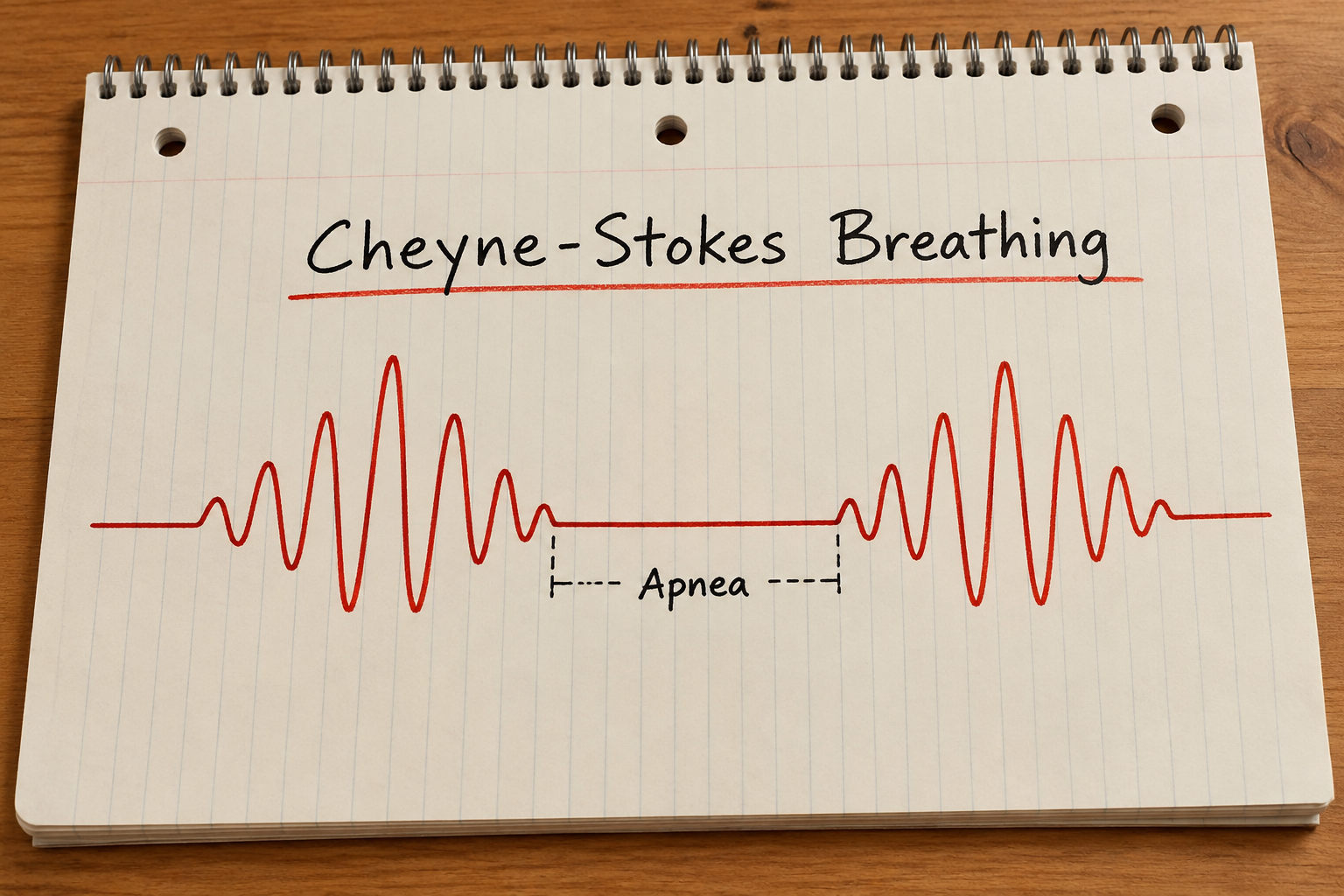
Short answer: Cheyne-Stokes breathing is a repeating cycle in which breaths gradually become deeper and faster, then become shallower and slower, followed by a pause with no breathing. In someone who is known to be approaching the end of life, it can be part of the natural dying process. The pattern can occur during the final days or hours, but it cannot predict the exact time of death. Call the hospice team whenever you notice a new breathing change or need reassurance.
- The pattern rises and falls, then pauses before breathing begins again.
- It may come and go or change from one cycle to the next.
- The pattern can look frightening to family members, but it is not usually uncomfortable for a person who is unconscious or minimally responsive.
- No breathing pattern can provide an exact countdown to death.
- Call hospice if breathing is new, worsening, or accompanied by signs of discomfort.
What Is Cheyne-Stokes Breathing?
Cheyne-Stokes breathing is an irregular breathing pattern that repeats in cycles. Breaths usually grow deeper and sometimes faster, then become progressively shallower. A pause, called apnea, follows before the cycle begins again.
The cycle can be subtle at first. Families may notice that the chest rises more with each breath, then less, followed by several seconds when it appears the person is not breathing. The pause can feel long to someone watching at the bedside.
Cheyne-Stokes breathing is not limited to the dying process. It can also occur with serious heart or neurologic conditions and during sleep. The meaning depends on the person’s health, diagnosis, and care plan. A clinician should assess a new pattern in someone who is not known to be near the end of life.
What Does Cheyne-Stokes Breathing Look and Sound Like?
The key feature is a predictable rise and fall in the depth of breathing:
- Breaths start shallow.
- They gradually become deeper and may become faster.
- They then become shallower and slower.
- Breathing pauses for a short period.
- The cycle starts again.
The pattern may be quiet, or it may occur alongside other end-of-life breathing sounds. A wet or rattling sound usually comes from saliva or mucus collecting in the throat and is commonly called a death rattle. That sound is different from the rise, fall, and pause of Cheyne-Stokes breathing.
Watch: A Hospice Nurse Explains Cheyne-Stokes Breathing
In this short video, a hospice nurse demonstrates the alternating deep breaths and pauses that families may see. She also explains why the pattern can look more alarming to a family member than it feels to a person who is unconscious and actively dying. Every person is different, so use the video as a visual guide and ask the hospice nurse what the pattern means for your loved one.
Why Does Cheyne-Stokes Breathing Happen Near the End of Life?
Near the end of life, the brain and body may become less able to keep breathing regular. Changes in circulation, oxygen and carbon dioxide levels, alertness, and the underlying illness can all affect the rhythm of breathing. The body’s response may lag behind these changes, creating the gradual rise, fall, and pause.
It is one of several breathing patterns families may notice when death is near. Other changes can include shallow breathing, longer pauses, noisy secretions, or occasional gasping breaths.
Does Cheyne-Stokes Breathing Mean Death Is Near?
In a person who is already known to be actively dying, Cheyne-Stokes breathing can be a sign that death is getting closer. It often appears with other changes such as sleeping most of the time, difficulty swallowing, reduced interest in food or fluids, cool hands or feet, and less urine.
However, Cheyne-Stokes breathing does not always mean a person is dying. It may occur with heart failure, stroke, brain injury, or sleep-related breathing disorders. Context matters. If the person is not enrolled in hospice or has not been expected to be near death, seek prompt medical assessment for a new breathing change.
How Long Does Cheyne-Stokes Breathing Last Before Death?
There is no reliable timetable. Irregular breathing with pauses may last minutes or hours for one person and continue for a couple of days for another. The pattern may stop and return. Even an experienced hospice clinician cannot use it by itself to name an exact time of death.
The hospice team will look at the whole picture, including alertness, circulation, swallowing, urine output, and other signs that someone may be actively dying. They can explain what they are seeing and help family members prepare while acknowledging the uncertainty.
Can Cheyne-Stokes Breathing Come and Go?
Yes. Cheyne-Stokes breathing may be noticeable for a time, become less obvious, and then return. The length of each pause and the depth of the breaths can also change from cycle to cycle. A temporary return to more regular breathing does not necessarily mean the person is recovering, and a longer pause does not provide an exact countdown.
Write down what you notice or tell the hospice nurse how often the cycles occur. A short video may also help the care team understand the pattern, if recording is appropriate and respectful for your family.
Is Cheyne-Stokes Breathing Painful?
The breathing pattern itself is not usually considered painful or uncomfortable near the end of life, especially when the person is unconscious or minimally responsive. It can still be deeply upsetting for family members to watch.
Do not assume every breathing change is comfortable. Call hospice if the person is grimacing, moaning, appearing panicked, using neck or chest muscles to breathe, or showing another new sign of distress. The nurse can assess possible pain, breathlessness, anxiety, secretions, or another cause and follow the comfort plan.
Cheyne-Stokes Breathing vs. Agonal Breathing
| Feature | Cheyne-Stokes breathing | Agonal breathing |
|---|---|---|
| Pattern | Breaths gradually deepen and then become shallower, followed by a pause. | Irregular gasps, snorts, or labored-looking breaths without the same gradual rise and fall. |
| Context | Can occur near the end of life and with certain heart, brain, or sleep conditions. | Can occur during cardiac arrest or in the final moments of life. |
| What to do | Follow the hospice plan and call the team with changes or concerns. | For an unexpected event outside hospice, call 911. For an expected hospice death, call the hospice team and follow the care plan. |
Sold Out about agonal breathing in hospice care.
What Can Families Do?
You do not need to stop the Cheyne-Stokes pattern itself. Focus on comfort and follow the person’s hospice care plan.
- Stay nearby and speak in a calm, familiar voice.
- Offer gentle touch, such as holding a hand, if it seems welcome.
- Keep the room quiet and comfortably cool.
- Reposition the person only as directed by the hospice team.
- Do not give food, liquids, oxygen, or medication unless the care plan or hospice team directs you to do so.
- Take breaks and ask another trusted person to sit at the bedside when you need rest.
Hearing may remain even when a person cannot respond. A reassuring voice, favorite music, prayer, or quiet presence can still be meaningful.
When Should You Call Hospice?
Call the hospice team whenever breathing changes or you are unsure what you are seeing.
- The breathing pattern is new or has changed significantly.
- Your loved one appears uncomfortable, frightened, restless, or in pain.
- You hear new rattling or see increased effort to breathe.
- You need help with repositioning, medicines, or the comfort plan.
- You think death may be near or you simply need reassurance.
Hospice families should call their hospice number rather than 911 for an expected change related to the dying process, unless the care plan says otherwise. If the person is not enrolled in hospice and the breathing change is sudden or appears to be an emergency, call 911.
Frequently Asked Questions
What triggers Cheyne-Stokes breathing?
The pattern can develop when the brain’s control of breathing becomes less stable. Near the end of life, this may happen as circulation and body systems slow. It can also be associated with heart failure, stroke, brain injury, high altitude, or sleep-related breathing disorders.
How do I know if it is Cheyne-Stokes breathing?
Look for a repeating cycle in which breaths gradually become deeper and then shallower, followed by a pause. Other breathing changes can look similar, so ask a hospice nurse or clinician to assess the pattern rather than relying on a description alone.
How long can the pauses last?
The length varies, and pauses may become longer or shorter over time. Timing the pauses cannot reliably predict when death will occur. Call hospice if the pattern is new, the person appears distressed, or you need help understanding what you see.
Can a person hear me during Cheyne-Stokes breathing?
A person may still be able to hear or feel your presence even if they cannot respond. Speak gently, identify yourself, and offer reassuring touch if it is welcome.
Should I wake someone who has Cheyne-Stokes breathing?
Usually there is no need to wake a person who is resting comfortably near the end of life. If you are uncertain, notice distress, or the breathing change is unexpected, call the hospice team for guidance.
Is Cheyne-Stokes breathing the same as a death rattle?
No. Cheyne-Stokes describes a rise-and-fall breathing rhythm with pauses. A death rattle is a wet or rattling sound caused by secretions in the throat or airways. They can occur at the same time, but they are different changes.
Sources and Medical Review
This article was developed using current guidance on end-of-life breathing changes from the NHS and Marie Curie. Online information cannot replace advice from the person’s hospice or medical team.
Changes in breathing can be difficult to watch, even when they are expected. The team at Suncrest Hospice can explain what is happening, assess comfort, and support the whole family. If you need help, contact us today.