
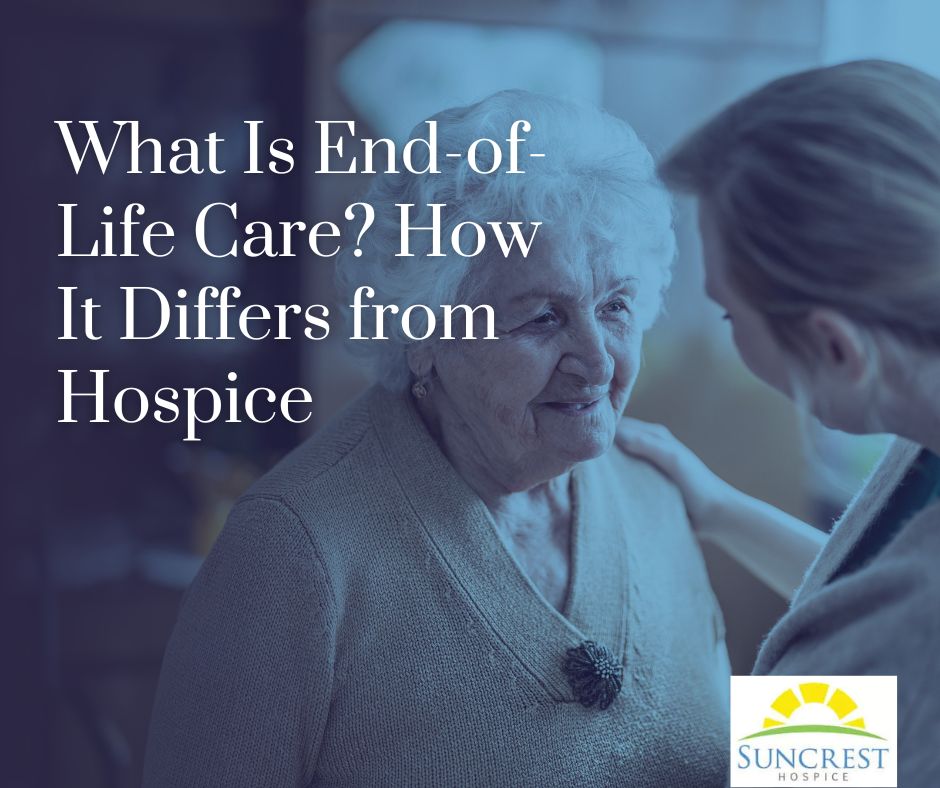
Short answer: End-of-life care is a broad term for support during the final phase of a serious illness. Hospice is a specific, structured program of end-of-life care, with its own Medicare benefit, eligibility rules, and care team. All hospice is end-of-life care, but not all end-of-life care is hospice. If your loved one has a prognosis of six months or less and has stopped curative treatment, hospice is likely the right fit.
- End-of-life care is the general term for support near the end of a serious illness
- Hospice is a specific, Medicare-defined program within end-of-life care
- Hospice requires a six-month-or-less prognosis and stopping curative treatment
- Both prioritize comfort, dignity, and quality of life
- Suncrest provides hospice care, structured end-of-life support with a full care team
- Not sure which fits your situation? A quick call can clarify it
What Is End-of-Life Care?
End-of-life care is a broad umbrella term for the medical, emotional, and practical support given to someone in the final phase of a serious illness. It can happen in a hospital, a nursing facility, or at home, and it can be provided by many different types of teams, not just hospice.
End-of-life care can include pain relief, emotional support, spiritual care, and help with decisions about treatment. It does not always follow a formal program or come with a specific set of eligibility rules. It is the general category, not a defined benefit.
What Is Hospice Care?
Hospice is a specific, structured type of end-of-life care with defined eligibility rules and a Medicare benefit attached to it. To qualify, a patient generally needs a physician-certified prognosis of six months or less and must choose to stop curative treatment for the terminal illness.
Once enrolled, hospice brings a full interdisciplinary team, nurses, aides, social workers, chaplains, and volunteers, focused specifically on comfort. Medicare typically covers hospice care in full, including medication, equipment, and visits.
What Is the Real Difference Between End-of-Life Care and Hospice?
Think of it this way: end-of-life care is the category, hospice is a specific program inside that category. All hospice is end-of-life care. Not all end-of-life care is hospice.
The practical differences usually come down to structure and coverage:
- Eligibility: Hospice requires a six-month-or-less prognosis and an election to stop curative treatment. General end-of-life care has no such formal requirement.
- Team: Hospice guarantees a specific interdisciplinary team. Other end-of-life care may involve fewer coordinated services.
- Coverage: Hospice has a defined Medicare benefit. Other end-of-life care may be billed differently, or not covered the same way.
- Duration: Hospice can continue as long as eligibility criteria are met, sometimes well beyond six months.

Can End-of-Life Care Happen at Home?
Yes. Both general end-of-life care and hospice can be delivered at home. In fact, home is the most common setting for hospice care specifically. A patient can receive nursing visits, medication management, and emotional support without leaving their own bed.
How Does This Compare to Palliative Care and Comfort Care?
These terms often get used interchangeably, and the overlap causes real confusion. Hospice and palliative care share a comfort-first approach, but palliative care can start much earlier in an illness and does not require stopping curative treatment. Our full breakdown of hospice vs palliative care covers that distinction in detail. Comfort care is a related term as well, and our guide to comfort care vs hospice explains how the two relate.
How Does Suncrest Fit Into End-of-Life Care?
Suncrest provides hospice care, the structured, Medicare-covered form of end-of-life care. Our team handles pain management, emotional and spiritual support, equipment, medication, and family education, all built around comfort rather than cure.
If your loved one’s situation does not clearly fit hospice criteria yet, that is a normal and common question. A conversation with our team can help you understand where things stand and what kind of support makes sense right now.
Not sure which type of care fits?
Call Suncrest and we will help you understand your options.
Frequently Asked Questions
Is hospice the same thing as end-of-life care?
Not exactly. Hospice is a specific, structured program within the broader category of end-of-life care, with its own eligibility rules and Medicare benefit.
Does end-of-life care always mean stopping treatment?
Not necessarily. General end-of-life care can include ongoing treatment. Hospice specifically requires electing to stop curative treatment for the terminal illness.
Can someone receive end-of-life care at home?
Yes. Both general end-of-life care and hospice care are commonly provided at home, with visits from nurses, aides, and other team members.
How long can hospice care last?
As long as the patient continues to meet eligibility criteria, which can extend well beyond the initial six-month prognosis through recertification.
What if I am not sure whether my loved one qualifies for hospice?
Call Suncrest. Our team can review your loved one’s situation and help you understand whether hospice or another form of end-of-life care fits best right now.